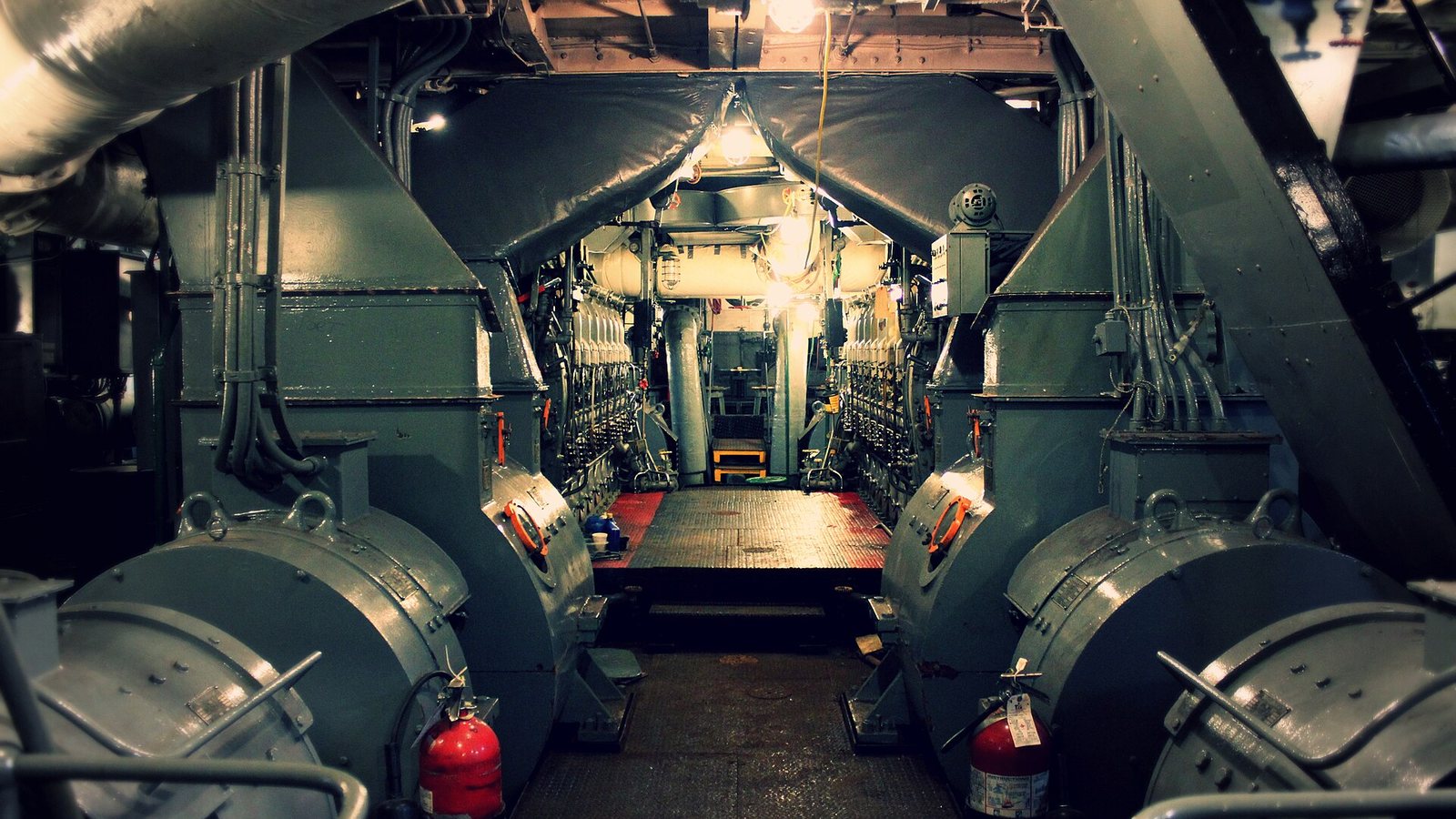
Marine Turbocharger: CHRA Exchange vs. Complete Housing Replacement
Technical Decision-Making in Marine Turbocharging
For ship superintendents and fleet managers, the turbocharger represents a critical node in engine efficiency and emission compliance. When a unit reaches its scheduled overhaul interval or suffers a functional degradation—such as surging, oil leakage, or abnormal vibration—the primary technical decision is whether to perform a Center Housing Rotating Assembly (CHRA) cartridge exchange or a full unit replacement.
This guide analyzes the technical trade-offs, logistical impacts, and total cost of ownership (TCO) associated with both strategies for medium and high-speed marine engines, including MAN, Wärtsilä, and Napier series.
The Cartridge (CHRA) Exchange Strategy
A CHRA consists of the compressor wheel, turbine wheel, shaft, and the complete bearing system (journal and thrust bearings) pre-assembled and balanced at the factory.
Advantages of Cartridge Replacement
Technical Risks
Reuse of the housings requires meticulous inspection. Any erosion or thermal cracking in the nozzle ring area or the compressor volute can lead to aerodynamic losses or premature failure of the new cartridge. If the previous failure involved a "hard" mechanical breakdown, metallic debris may be embedded in the housing walls, necessitating a full unit replacement to avoid immediate contamination of the new core.
Full Unit Replacement: When Is It Necessary?
A full unit replacement involves removing the entire assembly from the manifold. This is generally mandated in specific scenarios:
* Casing Erosion: If the internal clearances (tip-to-shroud) have increased beyond manufacturer tolerances (e.g., >0.5mm on certain MAN TCR units), a new cartridge will not restore original boost pressure.
* Thermal Fatigue: After 50,000+ running hours, exhaust gas housings often develop micro-cracks near the flange interfaces that risk structural failure.
* Upgrade/Retrofit: When upgrading to IMO Tier III compliance kits, the housing geometry often changes to accommodate different flow characteristics.
Comparative Analysis: Downtime and Logistics
| Factor | Cartridge (CHRA) | Full Unit Replacement |
|---|---|---|
| Install Time | 4-6 Hours | 8-12 Hours |
| Freight Weight | Lower (approx. 30% of total) | High (requires heavy crating) |
| Required Tools | Basic hand tools + torque wrench | Rigging/Overhead Crane |
| Lifecycle Reset | Partial (Mechanical only) | Total (Mechanical + Structural) |
Maintenance Intervals and Critical Spares
To maximize the ROI of either choice, engineers must adhere to rigid inspection protocols. For engines like the Wärtsilä 32 or MaK M32C, the following intervals are recommended:
* Daily: Monitor T/C RPM and Lub Oil Inlet Pressure.
* 2,000 Hours: Clean compressor side (water/grit wash depending on OEM spec).
* 8,000 - 12,000 Hours: End-play and radial clearance measurements.
* 24,000 - 32,000 Hours: Major overhaul or cartridge exchange.
Key part numbers to keep in inventory for these events include:
* Seal Rings (Piston Type): Essential for oil containment.
* Nozzle Rings: Highly susceptible to vanadium/sulfur corrosion.
* Flinger Sleeves: Critical for preventing oil carbonization.
The Role of Genuine Components
The temptation to utilize non-genuine or "will-fit" cartridges is high due to lower initial costs. However, in marine applications, the risks are disproportionate. Genuine cartridges from MarineLink Solutions ensure that the metallurgy of the turbine blades meets the specific heat-resistance requirements of heavy fuel oil (HFO) or dual-fuel combustion. Non-genuine alloys often suffer from "creep" at high temperatures, leading to catastrophic blade-to-housing contact. Furthermore, genuine parts guarantee that the damping characteristics of the bearing bushes are tuned to the engine's specific vibration frequency, preventing resonance-induced failure.
Cost-Benefit Summary
For vessels with well-maintained housings and less than 30,000 running hours, the Cartridge Exchange is the optimal path for reducing downtime and minimizing shipping costs. For older vessels or units showing signs of housing deformation, a Full Unit Replacement is a necessary investment to ensure engine reliability and fuel efficiency.
At MarineLink Solutions, we provide technical consultation to help fleet managers determine the most viable path for their specific engine configurations. Our global supply chain ensures that whether you require a complete TCR22 assembly or a specific CHRA for a Napier 357, the parts are available for your next port call.
Contact MarineLink Solutions today for a technical assessment of your turbocharger fleet requirements and a competitive quotation on genuine spares.
Need Spare Parts?
MarineLink Solutions supplies genuine parts for all major marine engine brands. Contact us for a fast, competitive quote.
Request a Quote