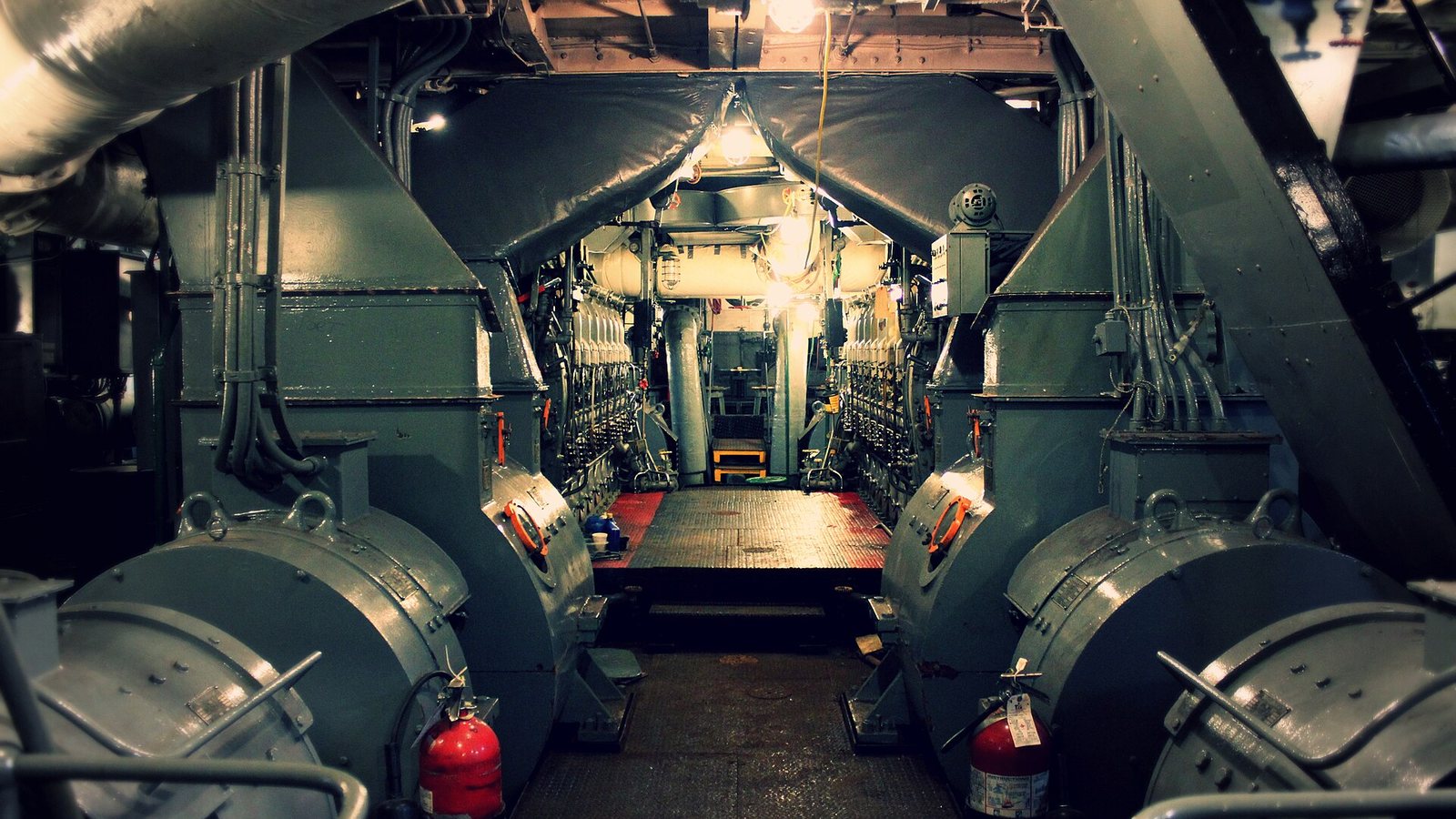
Deutz TCD 2015 Cooling System Service: A Technical Guide
Engineering Overview: The TCD 2015 Cooling Architecture
The Deutz TCD 2015 series, particularly in its V6 and V8 configurations, is a workhorse in marine auxiliary and propulsion applications. Its cooling system is a sophisticated dual-circuit design: an internal engine coolant circuit (freshwater) and an external raw water circuit (seawater). Given the high power density of these units, thermal management is the primary factor determining the longevity of the cylinder heads and turbocharger housings.
For ship superintendents and fleet managers, understanding the failure modes of this specific system is critical. A cooling failure on a TCD 2015 doesn't just lead to an alarm; it often results in immediate thermal deformation of the crankcase or cracking of the cylinder heads between the valve seats.
Critical Service Intervals and Parameters
Adhering to the Deutz Factory Maintenance Schedule (PMS) is the baseline, but marine environments often require accelerated intervals due to salinity and vibration.
* Daily/Per Shift: Check coolant level and verify the integrity of the expansion tank pressure cap.
* Every 500 Hours: Inspect the raw water pump impeller and check the tension of the poly-V belts driving the coolant pump.
* Every 1,000 Hours/Annually: Test coolant chemistry (nitrite levels and pH). Clean the external surfaces of the heat exchanger core.
* Every 2,000 Hours: Replace the coolant pump and thermostats as a preemptive measure against mechanical seal failure.
The Raw Water Circuit: Combating Scaling and Erosion
The heat exchanger (intercooler/oil cooler combination) on the TCD 2015 is susceptible to calcium carbonate scaling and marine growth. Even a 0.5mm layer of scale can reduce heat transfer efficiency by up to 30%.
Heat Exchanger Overhaul
When dismantling the heat exchanger, engineers must inspect the tube bundle for 'pitting' corrosion. If the V-engines are operated in shallow or silty waters, the end covers often accumulate sediment which restricts flow to the lower banks.
Actionable Step: Always replace the O-rings (Part No. 0426 0035 or similar, depending on specific serial number) and the sacrificial anodes during every inspection. Reusing compressed O-rings is a leading cause of seawater ingress into the engine room bilges.
The Internal Circuit: Pump and Thermostat Dynamics
The coolant pump on the TCD 2015 is a high-flow centrifugal unit. Its weak point is the mechanical seal. Early signs of failure include crusty deposits around the weep hole located behind the pulley.
Thermostat Testing
The TCD 2015 utilizes dual thermostats to manage the large volume of coolant. These are calibrated to begin opening at 83°C and reach full lift at 95°C.
* Diagnostic Tip: If the engine is running unevenly across banks, check that both thermostats are opening simultaneously. A 'lazy' thermostat will cause localized overheating in one cylinder bank while the global temperature sensor shows a normal reading.
Coolant Chemistry and Cavitation Protection
Marine engineers often overlook the role of cavitation in the TCD 2015. The high-speed vibration of the cylinder liners creates vacuum bubbles in the coolant. When these bubbles collapse, they pit the metal.
Only use Deutz DQC CA-14 or equivalent approved OAT (Organic Acid Technology) coolants. Mixing different types of coolants leads to "gelation," which blocks the narrow passages in the TCD 2015 oil cooler, leading to rapid oil temperature spikes and subsequent bearing wear.
The Importance of Genuine Spare Parts
The TCD 2015 operates at high thermal thresholds. Generic aftermarket coolant pumps often utilize inferior seal materials (nitrile vs. silicon carbide) and impellers with incorrect vane geometry. This results in reduced flow rates at low RPMs, exactly when a vessel is maneuvering and heat soak is at its peak.
Using genuine Deutz thermostats ensures the thermal expansion element is calibrated to the specific flow resistance of the TCD 2015 block. Non-genuine parts often have a wider tolerance range, leading to thermal cycling that stresses the head gaskets.
Troubleshooting Common Anomalies
Conclusion
Maintaining the Deutz TCD 2015 cooling system is an exercise in precision. By prioritizing the integrity of the heat exchanger, maintaining strict coolant chemistry, and replacing wear items like pumps and thermostats with genuine components, fleet managers can significantly extend the Mean Time Between Overhauls (MTBO).
MarineLink Solutions specializes in the rapid supply of genuine Deutz components and technical support for TCD series engines. Whether you require a complete heat exchanger overhaul kit or emergency pump replacements, our technical team is ready to assist your fleet.
Contact MarineLink Solutions today for a customized spare parts strategy for your Deutz-powered vessels.
Need Spare Parts?
MarineLink Solutions supplies genuine parts for all major marine engine brands. Contact us for a fast, competitive quote.
Request a Quote