Cylinder liners and pistons form the heart of every diesel engine's power generation cycle. As these components wear over time, engine efficiency drops, oil consumption increases, and emissions worsen. Understanding wear limits, replacement intervals, and parts selection is fundamental knowledge for any marine engineer.
Cylinder liners wear primarily in the upper ring travel zone — the area where combustion pressures are highest and lubrication is most challenging. Wear patterns include:
Abrasive wear — From combustion deposits and inadequately filtered air or fuelCorrosive wear — From sulphuric acid formed during combustion, especially with high-sulphur fuelsCavitation erosion — On the outer (coolant) side of wet liners, caused by pressure waves in the coolantPolished bore — A glazed surface that prevents proper oil film retentionReplace liners when:
Bore diameter exceeds the manufacturer's maximum wear limit (typically 0.4–0.8% of nominal bore)Out-of-round exceeds specified toleranceDeep scoring or scuffing is visibleCavitation pitting has penetrated the liner wallCorrosive wear has removed the chrome or surface treatmentAlways measure liner wear at multiple depths and orientations using a bore gauge — visual inspection alone is insufficient.
**Piston crown:**
Inspect for burning, cracking, or erosion (indicates combustion problems)Measure crown thickness — replace if below minimumCheck ring groove widths — excessive wear causes ring flutter and blow-by**Piston skirt:**
Inspect for scuffing or scoringMeasure diameter — excessive clearance in liner causes piston slap**Piston rings:**
Measure ring gap in new liner bore — must be within specificationInspect ring faces for wear or damageAlways replace rings when replacing liners**Cylinder liners:**
Cast iron liners are standard for most medium-speed enginesSpecify standard or oversized bore depending on whether block has been reboredChromium-plated bore liners offer extended service life in harsh operating conditions**Piston assemblies:**
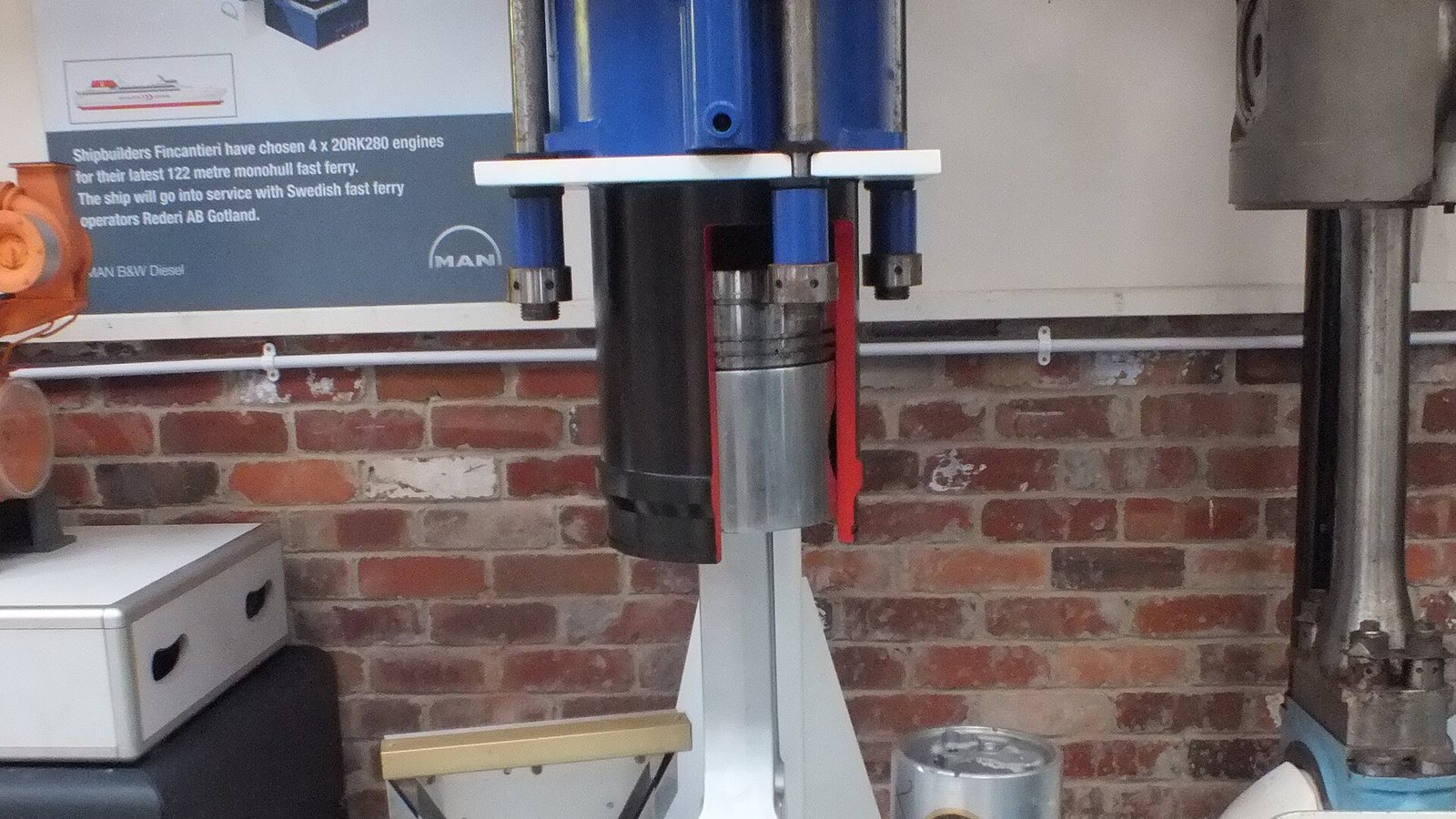
Two-piece articulated pistons (separate crown and skirt) are common on medium-speed enginesSpecify correct crown alloy — steel crowns for high-pressure engines, aluminium for lighter unitsAlways replace the piston pin and circlips**Piston rings:**
Top compression ring: chromium-plated or PVD-coated for maximum wear resistanceSecond compression ring: often tapered face designOil control ring: multi-piece or coil-spring-loaded designsClean thoroughly — All mating surfaces must be perfectly clean before assemblyMeasure everything — Verify bore, piston, and ring clearances before assemblyUse a ring compressor — Prevents ring damage during piston insertionLubricate correctly — Apply clean engine oil to liners and pistons; do not use greaseObserve liner pre-load — Wet liner O-ring compression must be within specificationRun-in procedure — Follow manufacturer's run-in schedule after liner/piston replacementMarineLink Solutions supplies cylinder liners, pistons, and ring sets for all major marine engine brands including Wärtsilä, MaK, Caterpillar, Cummins, Sulzer, Volvo Penta, and Deutz. Contact us at sales@marinelinksolutions.com for accurate part numbers and fast worldwide delivery.